

Scope & Objectives
Digital music technologies are rapidly transforming how people learn, create, and experience music. Yet one of the most urgent and promising frontiers remains underexplored: accessibility. At ArtsIT 2026, we invite researchers, designers, educators, therapists, and technologists to contribute to a dedicated track on Accessible Digital Music for Education and Therapy.
This track aims to bring together interdisciplinary perspectives on how digital musical tools can support inclusive learning, rehabilitation, wellbeing, and creative empowerment across diverse populations. We are particularly interested in work that bridges artistic practice, human–computer interaction, music technology, and health sciences. The last decade has seen major advances in:
- gesture‐based interaction
- browser‐native music systems
- adaptive interfaces
- AI‐driven musical expression
- multimodal feedback systems
- low‐cost and open‐source digital instruments
However, accessibility remains unevenly addressed. Many tools still assume normative bodies, neurotypical cognition, or traditional musical training. This track seeks to foreground research that challenges these assumptions and expands who can meaningfully participate in digital music‐making.
Special Track Topics
We welcome submissions that explore, but are not limited to:
- Accessible digital musical instruments (ADMIs)
- Gesture‐based or touch‐free musical interaction
- Music technologies for special education
- Digital tools for motor, cognitive, or sensory rehabilitation
- Inclusive design methodologies for music technology
- AI‐augmented accessibility in musical expression
- Participatory design with disabled musicians or learners
- Case studies from classrooms, clinics, and community settings
- Cross‐disciplinary frameworks connecting arts, therapy, and HCI
- Ethical, cultural, and social dimensions of accessible music tech
We encourage submissions that offer:
- empirical studies
- design frameworks
- technological prototypes
- artistic explorations
- theoretical or methodological contributions
- evaluations in educational or therapeutic contexts
Both completed research and well‐grounded work‐in‐progress are welcome.
By gathering this community at ArtsIT 2026, we aim to:
- advance the state of the art in accessible music technology
- strengthen collaborations between researchers and practitioners
- highlight innovative tools that support diverse bodies and minds
- promote digital music as a powerful medium for inclusion, learning, and wellbeing
This track is an opportunity to shape a field that is not only technologically innovative, but socially transformative.
We warmly invite researchers, artists, educators, clinicians, and technologists to submit their work and help define the future of Accessible Digital Music for Education and Therapy. Your contributions will help expand the boundaries of what digital music can be — and who it can be for.
Special Track Chairs
 Elena Partesotti, Universidad de Valladolid Facultad De Educacion, Palencia, Spain
Elena Partesotti is a professor at the University of Valladolid and research collaborator at NICS (UNICAMP) working at the intersection of music technology, music education, therapy, and inclusive interaction design. She holds an International PhD Cum Laude in Music Technology applied to Music Therapy, awarded jointly by the University of Valladolid and the University of Campinas (UNICAMP, Brazil), where she patented E-MOCOMU — an Extended Digital Musical Instrument (EDMI) for therapeutic and artistic use — and pioneered the application of Digital Musical Instruments in music therapy. She later developed BehCreative, a multimodal EDMI that turns the human body into an interactive instrument, through a collaboration between the Brazilian Institute for Neuroscience and Neurotechnology (BRAINN) and the Interdisciplinary Nucleus for Sound Studies (NICS) at UNICAMP, where she conducted postdoctoral research supported by a FAPESP fellowship. She serves as Associate Editor of the International Journal of Art Therapy and, since 2024, is a member of the international Accessible Digital Music Network.
contact: [email protected]
 Marcella Mandanici, Conservatory L. Marenzio of Brescia, Italy
Marcella Mandanici is a music composer, researcher, and professor of music education at the Music Conservatory of Brescia (Italy). She has authored many vocal and theatrical works and, between 1986 and 1993, served as the artistic director of “Nuovi Spazi Sonori,” an Italian association for promoting and advancing contemporary music. Mandanici’s academic background includes a Master of Science (MSc) degree in Music Technology from the Conservatory of Como, which she obtained in 2012. Later, in 2016, she earned a Ph.D. in information engineering from the University of Padova. Her diverse educational background reflects her interdisciplinary approach to research and teaching. As a researcher, Mandanici focuses on applications for music education and rehabilitation. Her work has explored innovative ways of integrating technology into music education and using music as a means of rehabilitation. Since 2019, Mandanici has taught for the MSc degree in Technologies for Music Education. Throughout her career, Mandanici has authored over 30 scientific works in the areas of sound and music computing, multimedia, and music education.
contact: [email protected]
 Emma Frid, Researcher at Université Paris 8, France
Emma Frid is a researcher and engineer focused on music and audio technology, accessibility, and multimodal interface design. She received her PhD in Sound and Music Computing from KTH Royal Institute of Technology in 2020, with a thesis entitled “Diverse Sounds – Enabling Inclusive Sonic Interaction”. Emma is the author of the first comprehensive review of Accessible Digital Musical Instruments (ADMIs) and is an IAAP Certified Professional in Accessibility Core Competencies (CPACC). Before joining Université Paris 8 (CICM | MUSIDANSE), she conducted research at IRCAM STMS Lab (Paris), Sound and Music Computing Group (KTH, Stockholm), Adobe Research (San Francisco), and IDMIL Input Devices and Music Interaction Laboratory (McGill, Montréal).
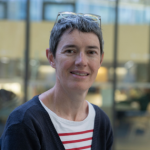 Coralie Vincent, CNRS (France’s national scientific research centre), France
Coralie Vincent is an engineer at the CNRS (France’s national scientific research centre). She serves as the coordinator of the experimental aspects of the ‘Sound/Music & Health’ research axis at Ircam’s Science & Technology for Music and Sound lab. Her work involves designing and developing devices that integrate human-computer interaction and auditory perception, with a focus on applications in well-being and healthcare.
contact: [email protected]
Special Track Technical Program Committee Members & Reviewers
- Luca Ludovico, Università degli Studi di Milano
- Nicola Davanzo, Università degli Studi di Milano
- Giuseppe Bergamino, Università Politecnica delle Marche (UNIVPM)
- Leonardo Gabrielli, Università Politecnica delle Marche (UNIVPM)
- Leonardo Amico, Independent
- Federico Avanzini, Università degli Studi di Milano (UNIMI),
- Antonio Roda, Università degli Studi di Padova (UNIPD)
- Stefano Delle Monache, IRCAM – Institut de Recherche et Coordination Acoustique/Musique (Parigi)
- Simone Spagnol, Università Iuav di Venezia
- Marcello Messina, independent
- Emma Frid, IRCAM, Paris
- Coralie Vincent, IRCAM, Paris
Publication
Conference Proceedings
All accepted and registered papers will be submitted for publishing by Springer – LNICST series and made available through SpringerLink Digital Library: ArtsIT Conference Proceedings. This series is indexed in leading indexing services, such as Web of Science, Compendex, Scopus, DBLP, EU Digital Library, IO-Port, MatchSciNet, Inspec and Zentralblatt MATH.
Available Journals
All accepted authors are eligible to submit an extended version in a fast track of:
- EAI Endorsed Transactions on Creative Technologies
- EAI Endorsed Transactions on Broadcasting Technologies
Authors have the opportunity to publish their articles in the EAI Endorsed Transactions journal selected by the conference (Scopus, Ei-indexed, ESCI-WoS, Compendex) by paying an additional $250, discounted from the standard $400 rate for conference authors.
The article’s publication is subject to the following requirements:
- It must be an extended version of the conference paper with a different title and abstract. In general, 30% of new content must be added.
- The article will be processed once the conference proceedings have been published.
- The article will be processed using the fast-track option.
- Once the conference proceedings are published, the corresponding author should contact us at [email protected] with the details of their article to begin processing.
Additional publication opportunities
- EAI Transactions series (Open Access)
- EAI/Springer Innovations in Communications and Computing Book Series
(titles in this series are indexed in Ei Compendex, Web of Science & Scopus)
EAI is an open community dedicated to creating an environment where every member receives the same opportunities, benefits and opportunities to develop and grow their research mission and career. As the largest free professional research society in the world EAI offers a complete range of conference proceedings publication opportunities. Based on the qualification of the conference and the conference scope EAI provides the possibility to publish the proceedings for every sponsored conference. Consistent with its mission to support developing communities all EAI sponsored conferences appear in EUDL, the European Union Digital Library (EUDL). EUDL is Open Access and free for EAI members reaching a community of 250,000 subscribers and providing the visibility that allows the conference organizers to develop the conference into a fully fledged indexed proceedings publication in subsequent years.
Paper Length
Papers should be submitted through the EAI ‘Confy+‘ system, and have to comply with the Springer format (see Author’s kit section).
- Full/ Regular papers should be 12-20 pages in length. (Excluding appendices, references, appreciation, etc.)
- Short papers should be 6-11 pages in length. (Excluding appendices, references, appreciation, etc.)
*Please note that additional pages will be subject to an extra charge for each extra page uploaded.
All conference papers undergo a thorough peer review process prior to the final decision and publication. This process is facilitated by experts in the Technical Program Committee during a dedicated conference period. Standard peer review is enhanced by EAI Community Review which allows EAI members to bid to review specific papers. All review assignments are ultimately decided by the responsible Technical Program Committee Members while the Technical Program Committee Chair is responsible for the final acceptance selection. You can learn more about Community Review here
Submission Guidelines
A 50% discount on the second paper is available for participants registering two accepted papers, provided both papers are authored by the same individual who will also be the sole attendee.
- Go to Confy+ website.
- Log in or sign up as a new user.
- Select your desired track.
- Click the ‘Submit Paper’ link within the track and follow the instructions.
Alternatively, go to the Confy+ homepage and click on “Open Conferences.”
Submission Guidelines:
- All papers must be submitted in English.
Submitted PDFs should be anonymized.
Double-blind review process.
- Previously published work cannot be submitted, nor can it be concurrently submitted to any other conference or journal. These papers will be rejected without review.
- Papers must follow the Springer formatting guidelines (available in the Author’s Kit section).
- Authors must read and agree to the Publication Ethics and Malpractice Statement.
Submission closes at 23:59 UTC (Coordinated Universal Time) on the day of the Submission Deadline.
- As per new EU accessibility requirements, going forward, all figures, illustrations, tables, and images should have descriptive text accompanying them. Please refer to the document below, which will assist you in crafting Alternative Text (Alt Text)
Springer AI Policies and Guidance
For full information, click HERE.
AI Authorship Policy
Large Language Models (LLMs), such as ChatGPT, do not currently satisfy our authorship criteria. Notably an attribution of authorship carries with it accountability for the work, which cannot be effectively applied to LLMs. We thus ask that the use of an LLM be properly documented in the Acknowledgements, or in the Introduction or Preface of the manuscript.
The use of an LLM (or other AI-tool) for “AI assisted copy editing” purposes does not need to be declared. In this context, we define the term “AI assisted copy editing” as AI-assisted improvements to human-generated texts for readability and style, and to ensure that the texts are free of errors in grammar, spelling, punctuation and tone. These AI-assisted improvements may include wording and formatting changes to the texts, but do not include generative editorial work and autonomous content creation. In all cases, there must be human accountability for the final version of the text and agreement from the authors that the edits reflect their original work. This reflects a similar stance taken on the AI generative figures policy, where it was acknowledged that there are cases where AI can be used to generate a figure without being concerned about copyright e.g. to generate a graph based on data provided by the author.
AI Authorship Guidance
Authors should familiarise themselves with the current known risks of using AI models before using them in their manuscript. AI models have been known to plagiarise content and to create false content. As such, authors should carry out due diligence to ensure that any AI-generated content in their book is correct, appropriately referenced, and follow the standards as laid out in our Book Authors’ Code of Conduct.
AI-generated Images Policy
The fast-moving area of generative AI image creation has resulted in novel legal copyright and research integrity issues. As publishers, we strictly follow existing copyright law and best practices regarding publication ethics. While legal issues relating to AI-generated images and videos remain broadly unresolved, Springer Nature journals and books are unable to permit its use for publication.
Exceptions:
- Images/art obtained from agencies that we have contractual relationships with that have created images in a legally acceptable manner.
- Images and videos that are directly referenced in a piece that is specifically about AI and such cases will be reviewed on a case-by-case basis.
- The use of generative AI tools developed with specific sets of underlying scientific data that can be attributed, checked and verified for accuracy, provided that ethics, copyright and terms of use restrictions are adhered to.
* All exceptions must be labelled clearly as generated by AI within the image field.
As we expect things to develop rapidly in this field in the near future, we will review this policy regularly and adapt if necessary.Note: Examples of image types covered by this policy include: video and animation, including video stills; photography; illustration such as scientific diagrams, photo-illustrations and other collages, and editorial illustrations such as drawings, cartoons or other 2D or 3D visual representations. Not included in this policy are text-based and numerical display items, such as: tables, flow charts and other simple graphs that do not contain images. Please note that not all AI tools are generative. The use of non-generative machine learning tools to manipulate, combine or enhance existing images or figures should be disclosed in the relevant caption upon submission to allow a case-by-case review.
AI-generated Images Guidance
For more information on the inclusion of third party content (i.e. any work that you have not created yourself and which you have reproduced or adapted from other sources) please see Rights, Permissions, Third Party Distribution.
Author’s kit – Instructions and Templates
Papers must be formatted using the Springer LNICST Authors’ Kit.
Instructions and templates are available from Springer’s LNICST homepage:
Please make sure that your paper adheres to the format as specified in the instructions and templates.
When uploading the camera-ready copy of your paper, please be sure to upload both:
- a PDF copy of your paper formatted according to the above templates, and
- an archive in .ZIP file, containing LaTeX or Word source material prepared according to the above guidelines.
