

Scope & Objectives
Building on the contributions of the authors featured in the upcoming Routledge book Audio-Visualism: Reframing Relationships Between Sound & Image, this call for Special Track papers is situated within the contemporary context of evolving and transforming artistic practices in audio- visual performance, installation and hybrid immersive art practices. We invite submissions that address conceptual, formal, aesthetic, socio-political and/or technical concerns within audio-visual work, wherein the weight of the audio and visual domains is relatively equal and mutually reinforcing.
Special Track Topics
This Special Track invites contributions from the broader community of artists, designers, and makers working in audio-visual performance, immersive arts and experience design. This call encourages submissions that engage with key issues related to analogue and digital technologies, the social and political dimensions of audio-visual practices, the emergence of extended multi-screen practices include fulldome works, and emerging creative approaches that explore new modes of immersion and interaction. The objective is to foster a dialogue between theoretical reflection and practice- based research, and to examine how audio-visual, interactive, and game-based practices contribute to rethinking relationships between sound, image, space, and the social dynamics of experience in contemporary creative contexts.
We welcome original research, case studies, demonstrations, and artistic contributions that explore the possibilities of working in extended audio-visual contexts. Submissions should advance our understanding of the synergies between one or more of the following topics:
Audio-Visual Installation and/or Performance: Exploring the compositional and relational strategies artists and designers employ to integrate sound and image within performance and installation contexts, and the aesthetic outcomes these produce.
Interaction Design and Audio-Visuals: Examining how interactive systems and interfaces shape the dynamic relationship between sonic and visual elements, and the implications for audience agency and experience.
Immersive Art: Investigating the creative and technical approaches that artists use to construct enveloping sensory environments in which sound and image work together to transform spatial and perceptual experience.
Analogue and Digital Technologies and Approaches: Considering how the choice and combination of analogue and digital tools and processes influence the aesthetic, conceptual, and material character of audio-visual work.
Social-Political Implications of Audio-Visuals: Interrogating the ways in which audio-visual practices engage with, reflect, or challenge broader social, cultural, and political conditions and power structures. Investigating the creative and technical approaches that artists use to construct enveloping sensory environments in which sound and image work together to transform spatial and perceptual experience.
Game Design and Platforms: Exploring how game engines, mechanics, and interactive platforms offer new possibilities for structuring and experiencing the relationship between sound, image, and player agency.
Multi-Screen Installation and/or Performance: Examining expanded and distributed screen-based practices — including full dome and panoramic formats — that reconfigure the spatial and temporal dynamics of audio-visual work.
Special Track Chairs
 Steve Gibson, Associate Professor, Arts and Environment, Northumbria University.
Steve Gibson is an audio-visual performer and Associate Professor at Northumbria University. He has presented at many world-leading venues including ISEA2025 Seoul, 404 Festival Mexico City, and Cabaret Voltaire. https://www.telebody.ws/
contact: [email protected]
 Yan Breuleux, Professor at École des arts numériques, de l’animation et du design (NAD), Université du Québec à Chicoutimi, Université du Québec à Chicoutimi.
Yan Breuleux is Full Professor at NAD – Université du Québec à Chicoutimi. His research- creation practice focuses on visual music for fulldome environments, examining the interplay between narrativity, sensoriality, and immersion in audio-visual practices. https://portfolio.uqac.ca/yanbreuleux/ (in French)
contact: [email protected]
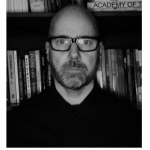 Paul Goodfellow, Senior Lecturer. Computational Art Theory & Practice, Division of Games Technology and Mathematics, Abertay University.
Paul Goodfellow is an artist and Senior Lecturer at Abertay University. Paul has presented his work at ISEA (Istanbul), Transart Film Festival (Berlin), and Baltic Centre for Contemporary Art (Newcastle). https://rke.abertay.ac.uk/en/persons/paul-goodfellow/
contact: [email protected]
 Joseph Hyde, Emeritus Professor, Creative Music Technology, Bath Spa University.
Joseph Hyde’s work incorporates a wide variety of influences in live electronics, audio- visuals and immersion. He is Emeritus Professor at Bath Spa University and is currently working for HVN Labs developing next-generation drone light shows.
contact: [email protected]
Special Track Technical Program Committee Members & Reviewers
- Samuel Bianchini, École Nationale Supérieure des Arts Décoratifs (EnsAD), PSL Research University Paris and head of the “Reflective Interaction” Research Group of EnsadLab
- Dominique Cunin, École Nationale Supérieure des Arts Décoratifs, Paris,
- Rui Filipe Antunes, CICANT – Universidade Lusófona, Portugal
- Luc Courchesne, Université de Montréal (1989-2013), Founding member of the Society for Art and Technology (Montréal), and former Director (2009-2014)
- Bret Battey, Audiovisual Composition, Music, Technology and Innovation Research Group, De Montfort University, Leicester, UK
- Hadi Mehrpouya, Department of Games Technology and Mathematics, Abertay University, Dundee, UK
- Joseph De Lappe, Department of Games and Arts, Abertay University, Dundee, UK
Publication
Conference Proceedings
All accepted and registered papers will be submitted for publishing by Springer – LNICST series and made available through SpringerLink Digital Library: ArtsIT Conference Proceedings. This series is indexed in leading indexing services, such as Web of Science, Compendex, Scopus, DBLP, EU Digital Library, IO-Port, MatchSciNet, Inspec and Zentralblatt MATH.
Available Journals
All accepted authors are eligible to submit an extended version in a fast track of:
- EAI Endorsed Transactions on Creative Technologies
- EAI Endorsed Transactions on Broadcasting Technologies
Authors have the opportunity to publish their articles in the EAI Endorsed Transactions journal selected by the conference (Scopus, Ei-indexed, ESCI-WoS, Compendex) by paying an additional $250, discounted from the standard $400 rate for conference authors.
The article’s publication is subject to the following requirements:
- It must be an extended version of the conference paper with a different title and abstract. In general, 30% of new content must be added.
- The article will be processed once the conference proceedings have been published.
- The article will be processed using the fast-track option.
- Once the conference proceedings are published, the corresponding author should contact us at [email protected] with the details of their article to begin processing.
Additional publication opportunities
- EAI Transactions series (Open Access)
- EAI/Springer Innovations in Communications and Computing Book Series
(titles in this series are indexed in Ei Compendex, Web of Science & Scopus)
EAI is an open community dedicated to creating an environment where every member receives the same opportunities, benefits and opportunities to develop and grow their research mission and career. As the largest free professional research society in the world EAI offers a complete range of conference proceedings publication opportunities. Based on the qualification of the conference and the conference scope EAI provides the possibility to publish the proceedings for every sponsored conference. Consistent with its mission to support developing communities all EAI sponsored conferences appear in EUDL, the European Union Digital Library (EUDL). EUDL is Open Access and free for EAI members reaching a community of 250,000 subscribers and providing the visibility that allows the conference organizers to develop the conference into a fully fledged indexed proceedings publication in subsequent years.
Paper Length
Papers should be submitted through the EAI ‘Confy+‘ system, and have to comply with the Springer format (see Author’s kit section).
- Full/ Regular papers should be 12-20 pages in length. (Excluding appendices, references, appreciation, etc.)
- Short papers should be 6-11 pages in length. (Excluding appendices, references, appreciation, etc.)
*Please note that additional pages will be subject to an extra charge for each extra page uploaded.
All conference papers undergo a thorough peer review process prior to the final decision and publication. This process is facilitated by experts in the Technical Program Committee during a dedicated conference period. Standard peer review is enhanced by EAI Community Review which allows EAI members to bid to review specific papers. All review assignments are ultimately decided by the responsible Technical Program Committee Members while the Technical Program Committee Chair is responsible for the final acceptance selection. You can learn more about Community Review here
Submission Guidelines
A 50% discount on the second paper is available for participants registering two accepted papers, provided both papers are authored by the same individual who will also be the sole attendee.
- Go to Confy+ website.
- Log in or sign up as a new user.
- Select your desired track.
- Click the ‘Submit Paper’ link within the track and follow the instructions.
Alternatively, go to the Confy+ homepage and click on “Open Conferences.”
Submission Guidelines:
- All papers must be submitted in English.
Submitted PDFs should be anonymized.
Double-blind review process.
- Previously published work cannot be submitted, nor can it be concurrently submitted to any other conference or journal. These papers will be rejected without review.
- Papers must follow the Springer formatting guidelines (available in the Author’s Kit section).
- Authors must read and agree to the Publication Ethics and Malpractice Statement.
Submission closes at 23:59 UTC (Coordinated Universal Time) on the day of the Submission Deadline.
- As per new EU accessibility requirements, going forward, all figures, illustrations, tables, and images should have descriptive text accompanying them. Please refer to the document below, which will assist you in crafting Alternative Text (Alt Text)
Springer AI Policies and Guidance
For full information, click HERE.
AI Authorship Policy
Large Language Models (LLMs), such as ChatGPT, do not currently satisfy our authorship criteria. Notably an attribution of authorship carries with it accountability for the work, which cannot be effectively applied to LLMs. We thus ask that the use of an LLM be properly documented in the Acknowledgements, or in the Introduction or Preface of the manuscript.
The use of an LLM (or other AI-tool) for “AI assisted copy editing” purposes does not need to be declared. In this context, we define the term “AI assisted copy editing” as AI-assisted improvements to human-generated texts for readability and style, and to ensure that the texts are free of errors in grammar, spelling, punctuation and tone. These AI-assisted improvements may include wording and formatting changes to the texts, but do not include generative editorial work and autonomous content creation. In all cases, there must be human accountability for the final version of the text and agreement from the authors that the edits reflect their original work. This reflects a similar stance taken on the AI generative figures policy, where it was acknowledged that there are cases where AI can be used to generate a figure without being concerned about copyright e.g. to generate a graph based on data provided by the author.
AI Authorship Guidance
Authors should familiarise themselves with the current known risks of using AI models before using them in their manuscript. AI models have been known to plagiarise content and to create false content. As such, authors should carry out due diligence to ensure that any AI-generated content in their book is correct, appropriately referenced, and follow the standards as laid out in our Book Authors’ Code of Conduct.
AI-generated Images Policy
The fast-moving area of generative AI image creation has resulted in novel legal copyright and research integrity issues. As publishers, we strictly follow existing copyright law and best practices regarding publication ethics. While legal issues relating to AI-generated images and videos remain broadly unresolved, Springer Nature journals and books are unable to permit its use for publication.
Exceptions:
- Images/art obtained from agencies that we have contractual relationships with that have created images in a legally acceptable manner.
- Images and videos that are directly referenced in a piece that is specifically about AI and such cases will be reviewed on a case-by-case basis.
- The use of generative AI tools developed with specific sets of underlying scientific data that can be attributed, checked and verified for accuracy, provided that ethics, copyright and terms of use restrictions are adhered to.
* All exceptions must be labelled clearly as generated by AI within the image field.
As we expect things to develop rapidly in this field in the near future, we will review this policy regularly and adapt if necessary.Note: Examples of image types covered by this policy include: video and animation, including video stills; photography; illustration such as scientific diagrams, photo-illustrations and other collages, and editorial illustrations such as drawings, cartoons or other 2D or 3D visual representations. Not included in this policy are text-based and numerical display items, such as: tables, flow charts and other simple graphs that do not contain images. Please note that not all AI tools are generative. The use of non-generative machine learning tools to manipulate, combine or enhance existing images or figures should be disclosed in the relevant caption upon submission to allow a case-by-case review.
AI-generated Images Guidance
For more information on the inclusion of third party content (i.e. any work that you have not created yourself and which you have reproduced or adapted from other sources) please see Rights, Permissions, Third Party Distribution.
Author’s kit – Instructions and Templates
Papers must be formatted using the Springer LNICST Authors’ Kit.
Instructions and templates are available from Springer’s LNICST homepage:
Please make sure that your paper adheres to the format as specified in the instructions and templates.
When uploading the camera-ready copy of your paper, please be sure to upload both:
- a PDF copy of your paper formatted according to the above templates, and
- an archive in .ZIP file, containing LaTeX or Word source material prepared according to the above guidelines.
